OEM / ODM Production Cooperation Process
Introduction:
This document outlines the complete production process for silicone baby tableware products, including bowls, plates, bibs, spoons, cups, and suction mats.
The process encompasses all stages from the initial customer inquiry to the final shipment of goods, ensuring a standardized approach to product quality, safety, and compliance with international standards.
This process applies to all silicone baby tableware manufacturing operations at our facility.
It is intended for use by internal stakeholders, including design teams, production personnel, quality control departments, and logistics staff.
Overview of Production Flow:
The following is a overview of the sequential stages in the production process:
- 1. Customer Inquiry and Requirement Confirmation
- 2. Product Design and Engineering
- 3. Sample Development
- 4. Mold Manufacturing
- 5. Raw Material Preparation
- 6. Silicone Molding
- 7. Trimming and Finishing
- 8. Decoration (e.g., printing, embossing)
- 9. Quality Control
- 10. Cleaning and Sterilization
- 11. Packaging
- 12. Warehousing
- 13. Shipping
- 14. After-Sales Support
- 15. Environmental and Safety Considerations
Stage 1: Order Communication and Requirements Gathering
1.1: Customer Inquiry
The process begins when a client contacts the company with a product request. Communication is typically initiated via: Email, Online platforms (Alibaba, company website), Trade shows, Phone or video calls.
1.2: Requirements Collection
Sales and project managers gather all relevant information including: Product type and intended use, Target market and compliance requirements, Quantity and delivery schedule, Color, shape, size, and packaging preferences, Branding requirements (logos, labels), Target price and budget constraints.
1.3: NDA and Confidentiality
If necessary, a Non-Disclosure Agreement (NDA) is signed before sharing customer designs or specifications.
Stage 2: Concept Design and Product Development
2.1: Conceptualization
Design engineers and product managers collaborate with the customer to develop initial concepts, including: Sketches and mood boards, Market research and competitor analysis, Functional requirements (e.g., suction function, ergonomic grip)
2.2: CAD Modeling
Designs are created in 3D CAD software (e.g., SolidWorks, AutoCAD, Rhino) with detailed dimensions and tolerances.
2.3: Design for Manufacturability (DFM)
Designs are reviewed for: Mold feasibility, Material flow and shrinkage, Demolding angles, Safety and ease of cleaning.
2.4: Customer Approval
The 3D design is sent to the customer for approval before prototyping begins. Feedback is incorporated until final confirmation.
2.5: Prototyping Options
Options include: 3D Printing (for visual and functional testing), Silicone Hand Molding (for material feel), Soft Tooling (low-cost aluminum molds).
2.6: Sample Review
Customers receive physical samples for: Material evaluation, Functional testing, Fit and finish, Color and branding review.
2.7: Sample Revisions
Multiple iterations may be conducted until the customer signs off on the Gold Sample or Production Sample.
Stage 3: Mold Design and Fabrication
3.1 Mold Design
Mold engineers create detailed mold blueprints based on final CAD files. Considerations include: Number of cavities, Cooling channels, Parting lines, Mold base compatibility.
3.2 CNC Machining
Molds are fabricated using CNC machining, EDM, and polishing. Materials used include: S136 stainless steel (for durability), Aluminum (for temporary molds).
3.3 Mold Testing (T0, T1 trials)
Initial mold trials are conducted to evaluate: Filling behavior, Air traps, Flash occurrence, Dimensional accuracy, Corrections are made before moving to mass production.
Stage 4: Raw Material Procurement and Handling
4.1 Material Selection
Only FDA and LFGB certified food-grade silicone is used. Properties include: BPA-free, Non-toxic, Heat and cold resistance (-40℃ to 230℃), Soft, flexible, yet durable.
4.2 Supplier Evaluation
Suppliers are vetted for: Quality certifications (ISO, FDA, LFGB), Traceability, Batch consistency.
4.3 Material Storage
Materials are stored in a temperature- and humidity-controlled environment, away from dust, UV exposure, and contaminants.
Stage 5: Silicone Compounding and Color Matching
5.1 Color Matching
Color masterbatch is created using silicone pigments. Color matching is based on Pantone references or customer swatches.
5.2 Compounding
Silicone base, pigments, and additives (if any) are blended using a two-roll mill or kneader.
5.3 Storage and Labeling
Each batch is labeled with: Batch number, Color code, Production date, Operator ID.
Stage 6: Molding Process
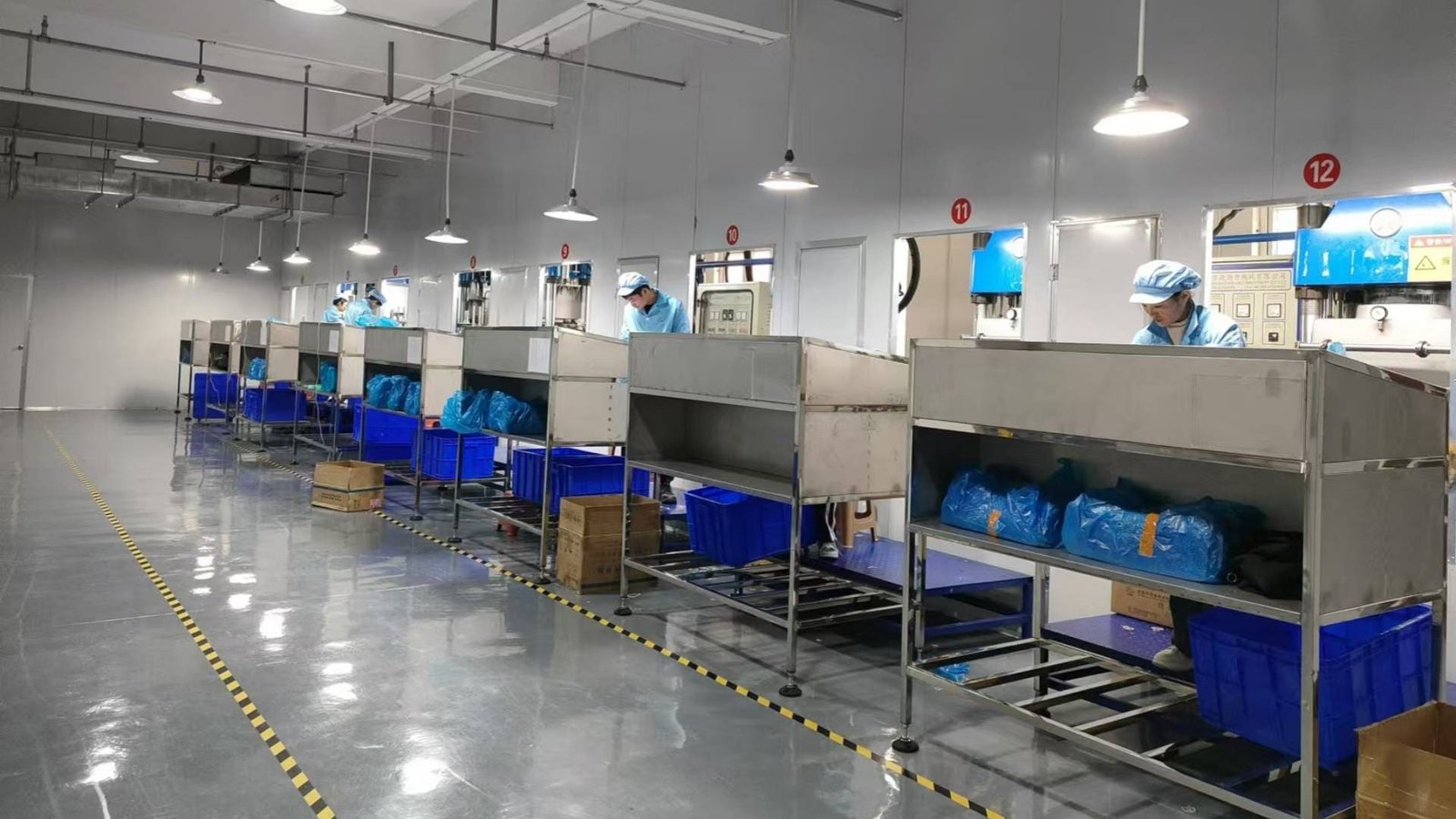
6.1 Compression Molding
Most silicone baby products are made using compression molding: Silicone compound is placed into the mold cavity. The mold is closed under high pressure and heated (170 ℃
– 200 ℃). Curing time ranges from 30 seconds to 5 minutes, depending on thickness.
6.2 Injection Molding (for complex items)
Injection molding is used for high-volume or complex designs. Liquid Silicone Rubber (LSR) is injected into the mold. Offers better precision and faster cycles.
6.3 Demolding
After curing, parts are demolded manually or with automated ejectors.
Stage 7: Post-Molding Processing
7.1 Trimming
Excess flash and sprues are removed using: Scissors or blades, Cryogenic deflashing (optional).
7.2 Surface Finishing
Surface may be: Polished, Sandblasted, Matte or glossy finished based on mold texture.
Stage 8: Printing and Decoration
8.1 Printing Options
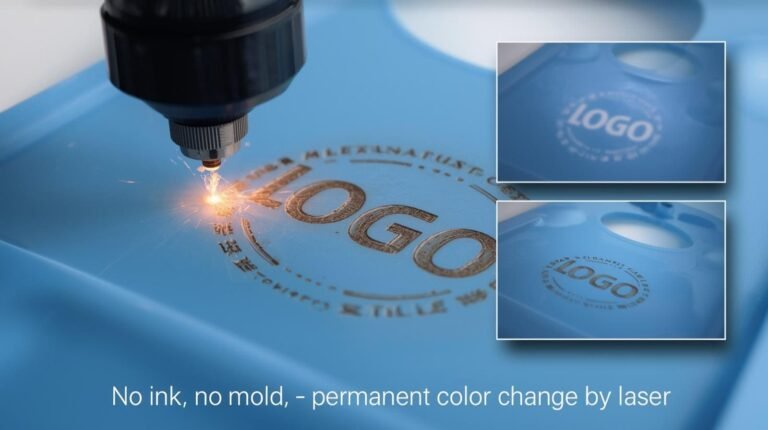
Pad Printing: For logos, characters, or measurements, Screen Printing: For large surface design, Laser Etching: Permanent markings, Embossing/Debossing: Molded directly into product.
8.2 Ink and Adhesion
Only food-safe, solvent-free inks are used. Adhesion tests (tape test, rub test) are conducted.
Stage 9: Quality Control and Inspection
9.1 In-Process QC
QC personnel inspect during molding and post-processing for: Flash, Deformation, Color inconsistency, Surface defects.
9.2 Final QC
Final inspection includes:, Dimensional check (calipers, gauges), Functionality (e.g., suction strength, stacking), Smell test (to detect off-gassing), Drop and durability test.
9.3 Compliance Testing
Products may undergo third-party testing for: FDA, LFGB compliance, BPA, phthalate testing, Heavy metal content.
Stage 10: Cleaning and Sterilization
10.1 Washing
Products are washed in industrial dishwashers or ultrasonic cleaners using: Food-safe detergents, Deionized water.
10.2 Drying
Air-dried or oven-dried at controlled temperatures.
10.3 Sterilization
Optional sterilization using:, UV sterilizers, Steam autoclaves.
Stage 11: Packaging
11.1 Inner Packaging
Polybags (PE or biodegradable), Paper wraps, Custom inserts (cardboard or molded pulp).
11.2 Retail Packaging
Printed boxes, Window boxes, Hanging tags.
11.3 Labeling
Labels include: Product name, Material description, Age suitability, Instructions and warnings, Barcode and batch number.
Stage 12: Warehousing and Inventory Management
12.1 Storage Conditions
Finished goods are stored in: Clean, dry, temperature-controlled warehouses, FIFO (First In, First Out) system.
12.2 Inventory System
Inventory is tracked using ERP or barcode systems to monitor: Stock levels, Expiry dates, Batch traceability.
Stage 13: Shipping and Logistics
13.1 Packaging for Shipment
Master cartons and pallets, Drop test compliance, Moisture-proof wrapping.
13.2 Documentation
Commercial invoice, Packing list, Certificate of origin, Test reports.
13.3 Logistics Coordination
Handled via: FOB, CIF, DDP terms, Air or sea freight, Third-party logistics partners.
Stage 14: After-Sales Support
14.1 Customer Feedback
Feedback is collected for: Quality issues, Packaging damage, Product improvements.
14.2 Returns and Replacements
Handled through customer service teams. Root cause analysis is performed for recurring issues.
Stage 15: Environmental and Safety Considerations
Waste Management
Silicone waste is recycled or reused, Mold oil and cleaning solvents disposed of per regulations.
Worker Safety
PPE for operators (gloves, aprons, masks), Ventilation and temperature control, Safety training and audits, Compliance and Certifications, Products and factory operations comply with: FDA, LFGB, EN14372, ISO 9001, ISO 14001, BSCI or SEDEX (social audits), CPC and CPSIA (for US market).
Conclusion
The manufacture of silicone baby tableware involves a multidisciplinary, highly regulated process to ensure product safety, durability, and customer satisfaction. Each stage – from design to shipping – contributes to delivering high-quality, compliant, and eco-friendly products to global markets.