Why Silicone Dominates Children’s Products
In modern parenting, “safety” and “health” have become the top priorities when selecting baby and children’s products.
In recent years, silicone has rapidly gained prominence in niche markets such as children’s tableware, teething toys, and baby food storage bags, gradually replacing traditional plastics, rubber, and even some metal alternatives.
What makes silicone so uniquely suited for this role? Why are families and brands around the world increasingly treating it as the “gold standard”?
This article provides a thorough analysis from four key perspectives: material advantages, application rationale, global market adoption, and supply chain selection.
1. Silicone: The Ideal Blend of Safety and Performance
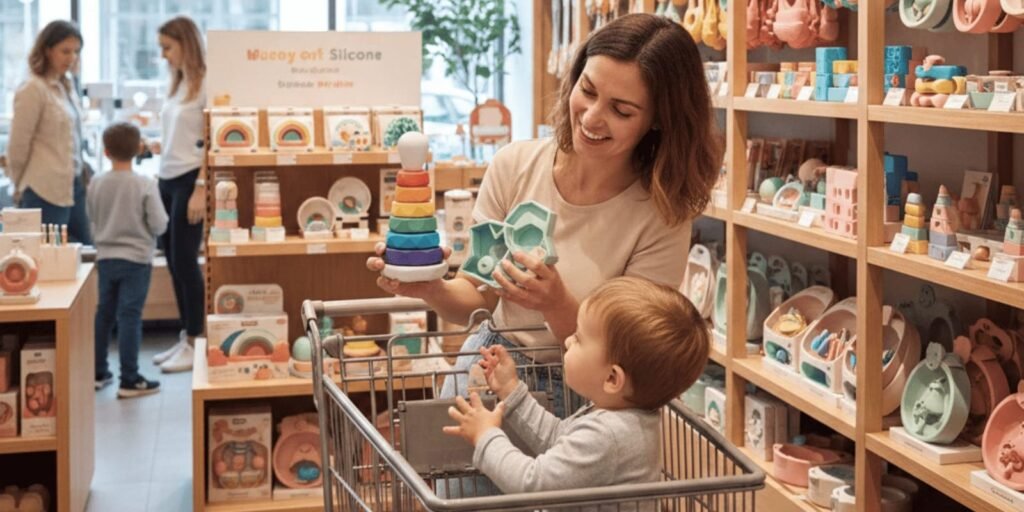
Silicone is a synthetic polymer based on silica (silicon dioxide)—distinct from conventional plastics like PP or PVC. It occupies a unique space between organic and inorganic materials, granting it a set of exceptional properties:
Exceptional Thermal Stability:
Food-grade silicone remains stable across an extreme temperature range of –60°C to +240°C. Whether freezing breast milk, steam-sterilizing bottles, or microwaving meals, silicone maintains its integrity without leaching harmful chemicals or deforming.
Unmatched Safety Profile:
Unmatched Safety Profile:
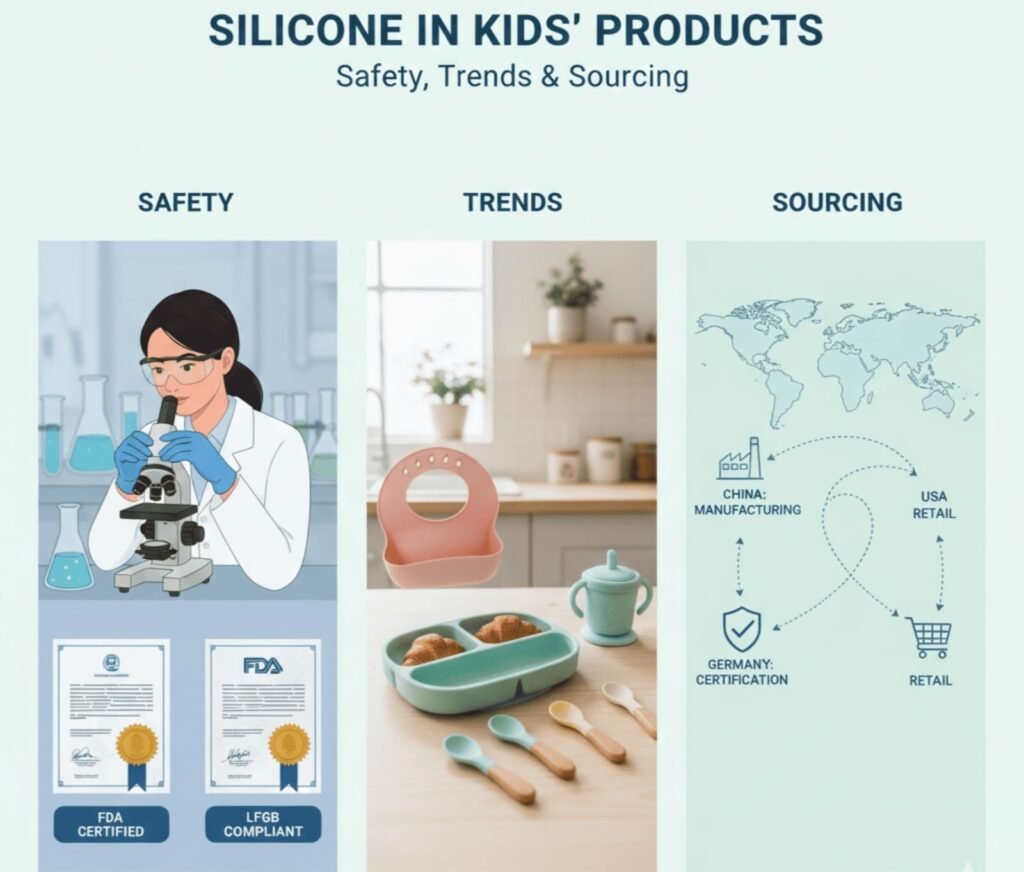
Certified food-grade silicone complies with stringent international standards such as the U.S. FDA, Germany’s LFGB, and China’s GB 4806.11. It contains no BPA, phthalates, lead, or cadmium—common endocrine disruptors found in lower-quality plastics. Its high biocompatibility is further evidenced by medical-grade silicone’s use in implants and catheters, underscoring its inertness and non-toxicity.
Soft Yet Durable:
Silicone offers gentle flexibility that cushions impacts, making it ideal for toddlers who frequently drop utensils. Unlike brittle plastics or sharp-edged metals, it won’t shatter into dangerous fragments—a critical safety feature for developing children.
Hygienic and Easy to Clean:
Its smooth, non-porous surface resists bacterial growth, oil absorption, and staining. It can be safely cleaned in dishwashers, sterilized with steam or UV light, and reused hundreds of times without degradation. Together, these attributes position silicone not merely as a “better” option—but as the minimum acceptable standard for infant and child safety.
2. Why Are Children’s Products Specifically Designed with Silicone?
A. Alignment with Infant Developmental Needs
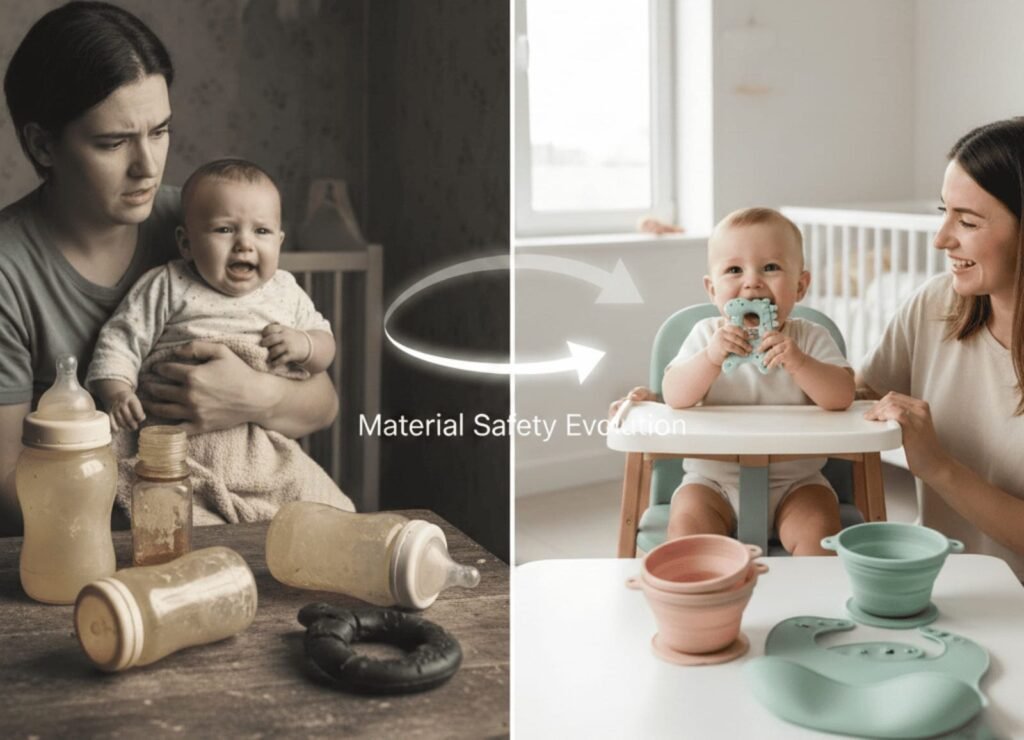
During teething, babies experience gum discomfort and often seek relief through chewing. Traditional rubber teethers may contain carcinogenic nitrosamines, while low-grade plastics can leach plasticizers. In contrast, food-grade silicone teethers are non-toxic, odorless, and offer just the right firmness to massage gums, stimulate saliva production, and support healthy tooth eruption—all without risk.
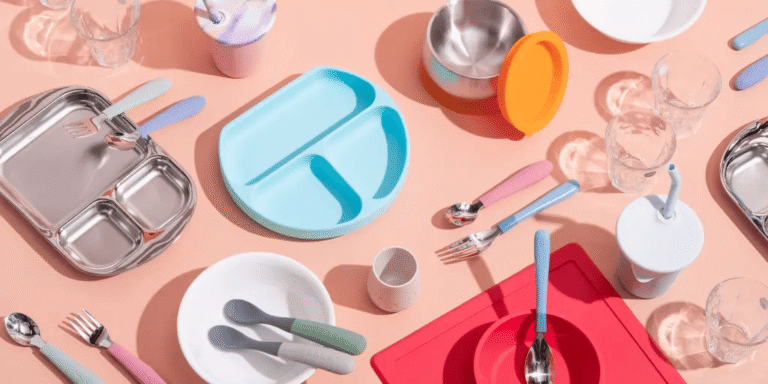
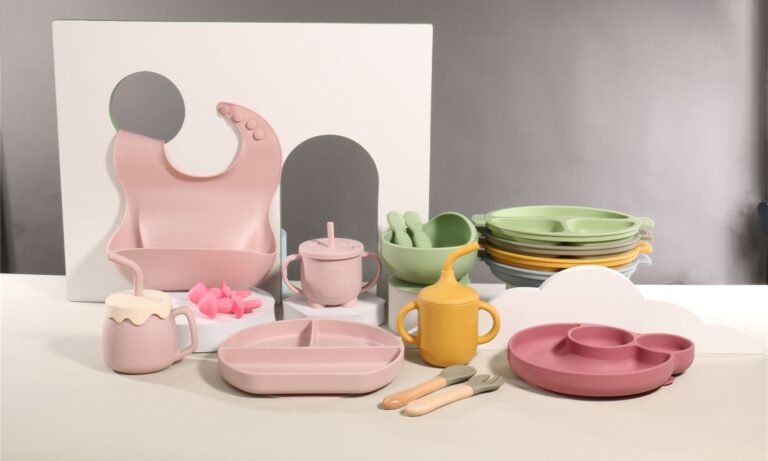
Similarly, silicone spoons feature rounded, flexible edges that won’t scratch delicate mouths, and their ergonomic curves fit small oral cavities. Silicone plates with suction bases stay firmly in place, reducing spills and encouraging self-feeding independence.
B. Meeting Modern Parents’ Demands for Efficiency
Today’s time-constrained caregivers prioritize durability, multi-functionality, and ease of cleaning. Silicone tableware withstands repeated dishwasher cycles, boiling water, and microwave use without warping.
Its vibrant colors and playful designs also make mealtime more engaging for picky eaters. While initial costs may be slightly higher than basic plastic, the long-term value—measured in safety, longevity, and peace of mind—makes silicone a cost-effective investment.
Caution: Beware of counterfeit “silicone” products made from TPE (thermoplastic elastomer) or filler-laden compounds. These cheaper alternatives often emit strong odors, degrade at high temperatures, and may release oily residues. Always look for official certifications and perform simple tests: genuine silicone snaps back quickly when stretched and burns to a fine white ash.
3. Global Adoption: Where Silicone Children’s Products Thrive
The global landscape reveals a clear pattern: high-income countries lead in adoption, while emerging markets are catching up rapidly.
Europe, North America, Japan, and South Korea Set the Standard:
Countries like Germany and France banned BPA in baby bottles over a decade ago, accelerating the shift toward silicone and glass. The U.S. FDA strictly regulates food-contact materials, permitting only compliant silicones for infant use. In Japan, silicone products are promoted under national “safe parenting” initiatives and dominate pharmacy and retail shelves.
China’s Market Is Growing Fast—but Quality Varies:
With digitally savvy Gen-Z parents driving demand, China’s online sales of silicone baby tableware grew at a CAGR of over 35% from 2020 to 2024 (per Tmall and JD.com data). However, the market is flooded with ultra-low-cost imitations, highlighting the urgent need for better regulation and consumer education.
Manufacturing Is Centered in China—with Wide Quality Gaps:
Roughly 70% of the world’s food-grade silicone goods are made in China, primarily in Dongguan, Shenzhen, and Taizhou. Leading factories meet international export standards, but smaller workshops often cut corners with recycled or adulterated materials. This explains why 15 “MadeinChina” silicone teether on Amazon earn sravere views, whilea ¥9.9 ($1.40) domestic version may trigger safety complaints.
4. How to Choose a Reliable Silicone Manufacturer: Advice for Brands and Buyers
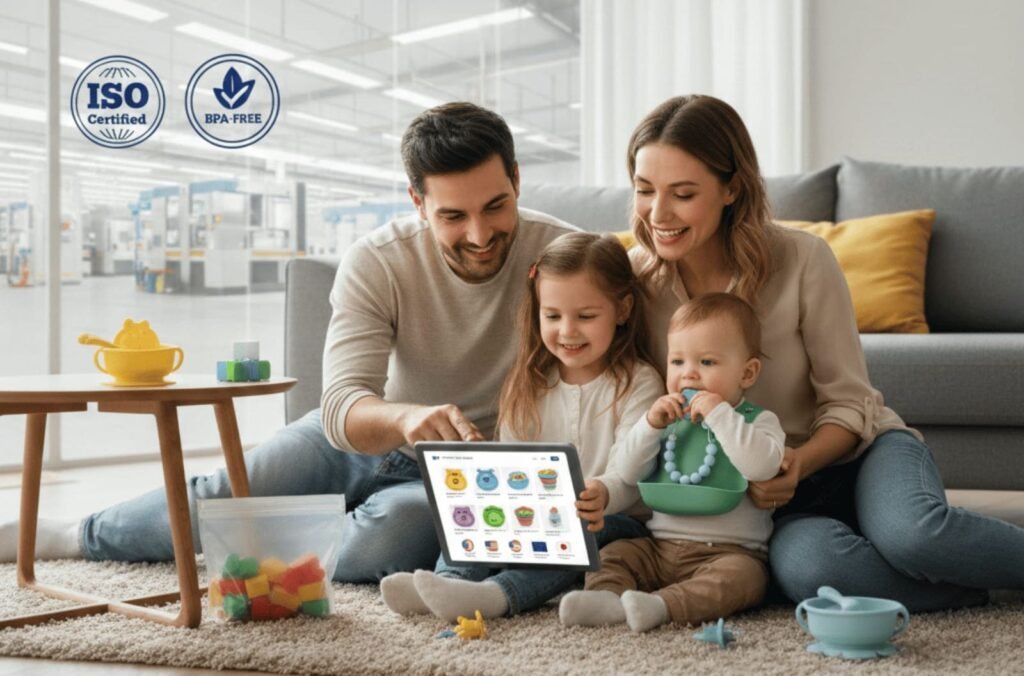
If you’re developing your own line of silicone children’s products, selecting the right factory is critical. Evaluate potential partners across these five dimensions:
Certifications Are Non-Negotiable
Ensure the factory holds ISO 9001 certification and can provide market-specific compliance documents (e.g., FDA registration, LFGB test reports).
Transparent Raw Material Sourcing.
Reputable suppliers specify premium-grade silicone from trusted brands like Dow (USA), Wacker (Germany), or Shin-Etsu (Japan). These raw materials guarantee purity, consistency, and performance—worth the higher cost.
In-House Mold Design & LSR Capability
Liquid Silicone Rubber (LSR) injection molding is the industry standard for high-end products, offering precision, speed, and minimal post-processing. Factories with their own mold-making departments reduce lead times and costs significantly.
Robust Quality Control Systems
Ask whether they operate an internal lab. Can they test every batch for hardness, tensile strength, volatile content, and odor? Do they conduct regular third-party inspections (e.g., via SGS or Intertek)?
Proven Track Record and Customer Focus
Review their portfolio—have they produced for established global brands like Munchkin, Nuby, or b.box? Clarify MOQs, delivery timelines, and after-sales support. A partner willing to assist with small trial runs and design optimization is likely invested in long-term collaboration.
For example, Dongguan Tiskavo Hardware Plastic Products Co., Ltd. a silicone manufacturer with over 8 years of experience not only maintains dual FDA/LFGB certification but also implements full traceability from raw material intake to final shipment. Their European-bound teething toys have achieved zero recalls over three consecutive years—a testament to professionalism and accountability.
Conclusion: Safety Is Not Optional—Material Choice Reflects Values
The rise of silicone in children’s products reflects more than a materials innovation—it signals a societal commitment to protecting the most vulnerable. For parents, every purchase is a vote for safety; for manufacturers, every product is a promise of trust.
Looking ahead, advances in recyclable and bio-based silicones may soon elevate the material from “safe” to “sustainable.” But today, our responsibility is clear: choose wisely, demand transparency, and never compromise on quality—because a child’s health leaves no room for error.
Tip for Consumers: When buying silicone baby products, always look for “food-grade silicone” labeling. Avoid items with overly bright colors (potential heavy metal dyes), strong chemical smells (residual curing agents), or sticky surfaces. True safety lies in the details.